Blog
Stairs, Voids and Double‑Heights: Lighting the Tricky Spaces in Contemporary New Builds

Stairs, voids and double-height spaces are defining features of many contemporary new builds. Whether it’s a sculptural staircase, a dramatic central void or a light-filled double-height living area, these elements create a sense of openness, flow and architectural impact. They connect levels visually and physically, often becoming focal points within the home rather than purely functional spaces.
Yet while these areas are striking, they are also some of the most challenging to light well. Their scale, height and position within a floorplan can lead to issues with shadow, glare, poor light distribution or spaces that feel cold and uninviting once daylight fades. Add in practical considerations such as safety, building regulations and long-term maintenance, and it’s clear that a single ceiling fitting simply won’t suffice.
Thoughtfully designed lighting transforms these tricky spaces. The right approach enhances safety on stairs, creates atmosphere in large volumes, and ties together the wider interior scheme with clarity with intent.
At Hampshire Light, we specialise in lighting solutions for complex architectural spaces, working closely with architects and interior designers to balance form and function. From early concept through to specification and supply, we help turn stairs, voids and double-height areas into beautifully lit highlights of contemporary homes.
Understanding the challenges
Lighting stairs, voids and double-height spaces in contemporary new builds comes with a unique set of challenges. These areas are often defined by their scale, location and architectural ambition, all of which demand a considered lighting approach from the outset.
Scale and proportion
High ceilings and long vertical sightlines can be visually impressive, but they also make lighting more complex. Without careful planning, light can be lost in the volume of the space, leaving areas that feel cold, dark or cavernous.
Achieving a sense of balance and human scale is key to making these spaces feel comfortable as well as dramatic.
Limited natural light
Many stair cores and central voids sit deep within the footprint of a home, with little access to daylight. In new developments, north-facing or shaded elevations are also common, further reducing natural light levels.
As a result, artificial lighting often needs to work harder and more intelligently to compensate throughout the day and into the evening.
Glare, shadows and light spill
Poorly positioned fittings can create harsh contrasts, uncomfortable glare or deep shadows, particularly on stairs where safety is critical.
Light can also end up falling where it’s not useful, illuminating ceilings while leaving treads, landings or circulation routes inadequately lit.
Precision and control are essential to avoid these pitfalls.
Access and maintenance
Height brings practical challenges too. Changing lamps or maintaining fittings in double-height spaces can be difficult and costly if not considered at the design stage.
This makes specification of long-life, high-quality luminaires and reliable light sources especially important, ensuring the lighting performs beautifully with minimal ongoing maintenance.
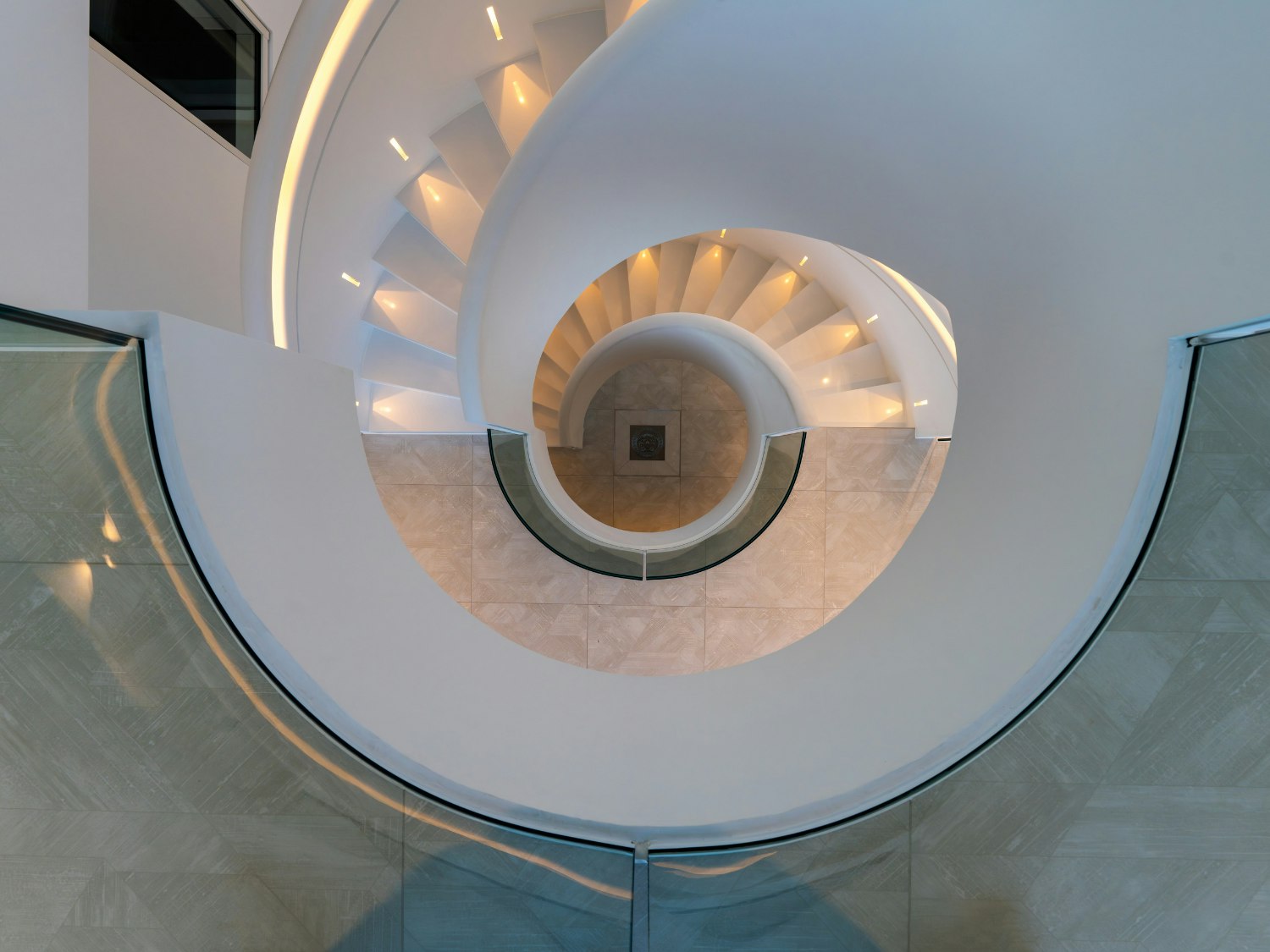
Lighting staircases: Safety meets style
A well-lit staircase is essential in any home, but in contemporary new builds it also presents an opportunity to make a strong design statement. Successful stair lighting balances strict functional requirements with creative, architectural expression.
- Meeting functional and safety requirements: Staircases must be lit in line with building regulations, with particular attention paid to safety and visibility. Consistent illumination of treads, risers and landings helps reduce the risk of trips and falls, while avoiding harsh contrasts that can distort depth perception. Well-controlled light is especially important where stairs are open to voids or double-height spaces.
- Layered lighting for clarity and comfort: A layered approach delivers both practicality and visual comfort. Recessed step lights clearly define each tread, while wall-mounted markers or low-level lighting guide movement without overwhelming the space. Handrail-integrated lighting offers a sleek contemporary option, providing continuous illumination that feels intuitive and unobtrusive.
- Creating a design statement: Staircases are also an opportunity to introduce drama and personality. Feature pendants suspended over stairwells can become sculptural focal points, drawing the eye through multiple levels. Linear lighting that follows the stair geometry reinforces clean architectural lines, enhancing both movement and the overall design narrative of the home.
Lighting voids and double-height spaces
Lighting voids and double-height spaces requires a thoughtful approach that balances their impressive scale with warmth, control and visual cohesion, ensuring these expansive areas feel both dramatic and inviting throughout the day and into the evening.
- Using vertical lighting to enhance the architecture: Voids and double-height spaces benefit from lighting that works with their verticality rather than fighting it. Tall pendants and multi-drop chandeliers can visually connect ground and upper levels, guiding the eye upward and creating a sense of flow throughout the space. When carefully proportioned, these fittings add drama while helping the scale of the area feel intentional and balanced.
- Architectural lighting techniques: Architectural lighting plays a key role in shaping how these large volumes are experienced. Wall washers can be used to emphasise height and reveal the full extent of tall walls, while uplighting softens vertical surfaces and reduces the feeling of harshness or emptiness. Accent lighting can highlight artwork, feature materials or textured finishes, adding depth and visual interest within the space.
- Controlling the atmosphere: Given their size, voids and double-height areas need flexible lighting control to suit different times of day and uses. Dimming and scene setting allow the mood to shift from bright and functional to warm and relaxed. Choosing the right colour temperature is equally important. Warmer tones tend to create a more inviting, comfortable feel, while neutral light can enhance architectural clarity when used thoughtfully.
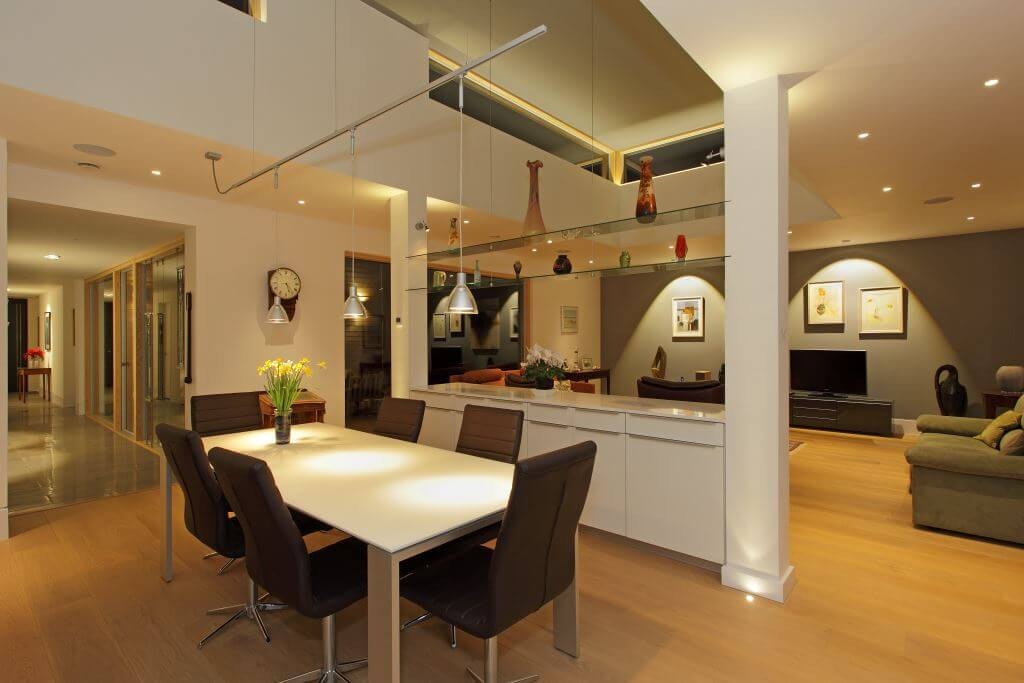
Smart and integrated lighting solutions
In voids and double-height spaces, access can be a real challenge, making smart lighting controls an invaluable part of the design. App-based systems, wall keypads and voice control allow homeowners to adjust light levels, change scenes or schedule lighting without the need to physically reach fittings at height. This improves day-to-day convenience while also helping to preserve the longevity and performance of the lighting installation.
Lighting becomes even more effective when it is integrated into a wider home automation system. Linking lighting with shading, blinds and other controls allows spaces to respond intelligently to natural daylight, improving comfort and energy efficiency throughout the day.
In contemporary new builds, this integrated approach creates a seamless, intuitive experience and ensures large, complex spaces feel balanced, adaptable and easy to live with.
Common mistakes to avoid
When it comes to lighting stairs, voids, and double-height spaces, even small missteps can have a big impact.
- One of the most common mistakes is relying on a single central fitting. While it might seem simple, it rarely provides enough light for large or tall spaces, leaving corners dark or creating harsh shadows.
- Over-lighting or under-lighting is another trap. Too much light can feel cold and clinical, while too little can make a space feel cavernous and uninviting.
- And perhaps the most overlooked issue is maintenance. Failing to plan for access to fittings in high or hard-to-reach areas can turn a single bulb change into a costly and stressful job.
Thinking ahead ensures your lighting not only looks stunning but also works practically for years to come.
Why lighting design should start early
Lighting should never be an afterthought in contemporary new builds. Early planning can save time, money and headaches later.
Key benefits of starting lighting design from the outset include:
- Seamless collaboration with designers: Working with lighting specialists early ensures the scheme aligns perfectly with stair designs, balustrades, finishes, and other architectural details.
- Avoiding costly retrofits: Planning ahead prevents the need for disruptive and expensive changes after construction is complete.
- Bespoke solutions from concept to completion: Hampshire Light brings experience with complex, contemporary spaces, supporting architects, interior designers, and homeowners from initial concept and specification right through to supply and ongoing support.
By integrating lighting into the design process from day one, tricky spaces can be transformed into functional, beautiful highlights rather than problematic afterthoughts.
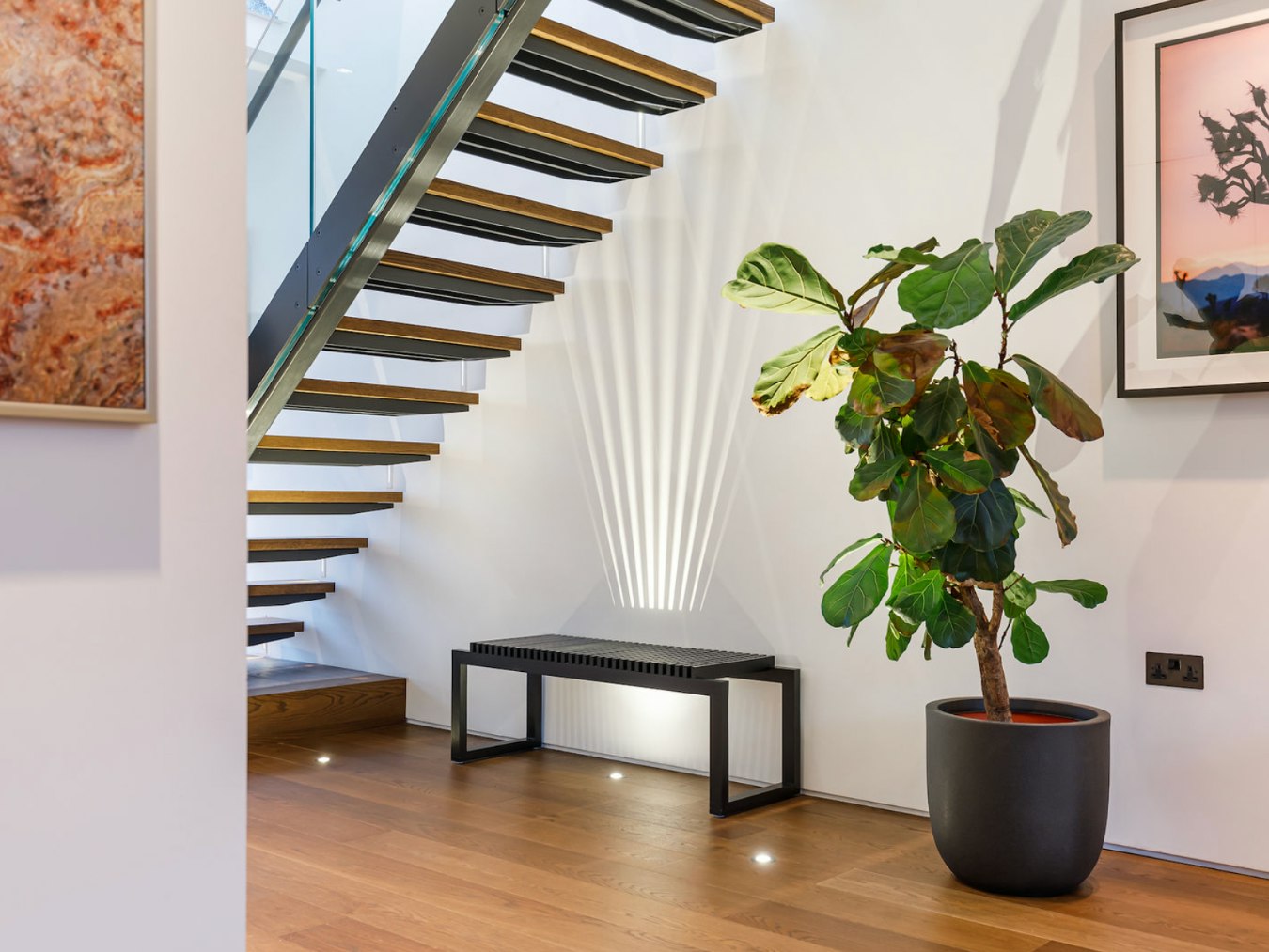
Turning tricky spaces into highlights
Thoughtful lighting has the power to transform stairs, voids, and double-height spaces from awkward or intimidating areas into striking architectural features.
By carefully considering scale, function, and atmosphere, these challenging spaces can become focal points that enhance both safety and the overall design of a home. Homeowners and developers alike benefit from expert guidance to ensure lighting is not only beautiful but also practical and long-lasting.
At Hampshire Light, we specialise in solving the unique lightingchallenges of contemporary new builds, working closely with architects and interior designers to create bespoke solutions that bring tricky spaces to life. For advice, inspiration, or support with your next project, our team is ready to help turn your architectural features into illuminated highlights.
